

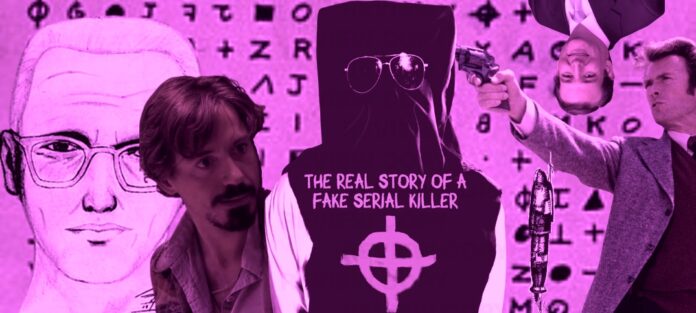
In Eddie McNamara’s book, Zodiactually, he asks (and answers) a question that turns true crime and serial killer knowledge on its head: What if the Zodiac Killer was just an urban legend that got wildly out of control?
Now, I know what you’re thinking – bull-fucking-shit. And I get it. There are countless books, documentaries, and FBI files on this thing! David Fincher made a movie! So, loving you all the way I do, I read the book and sat down with Eddie to talk this thing out. And you know what?
No one will ever be able to convince me that the Zodiac Killer existed ever again.
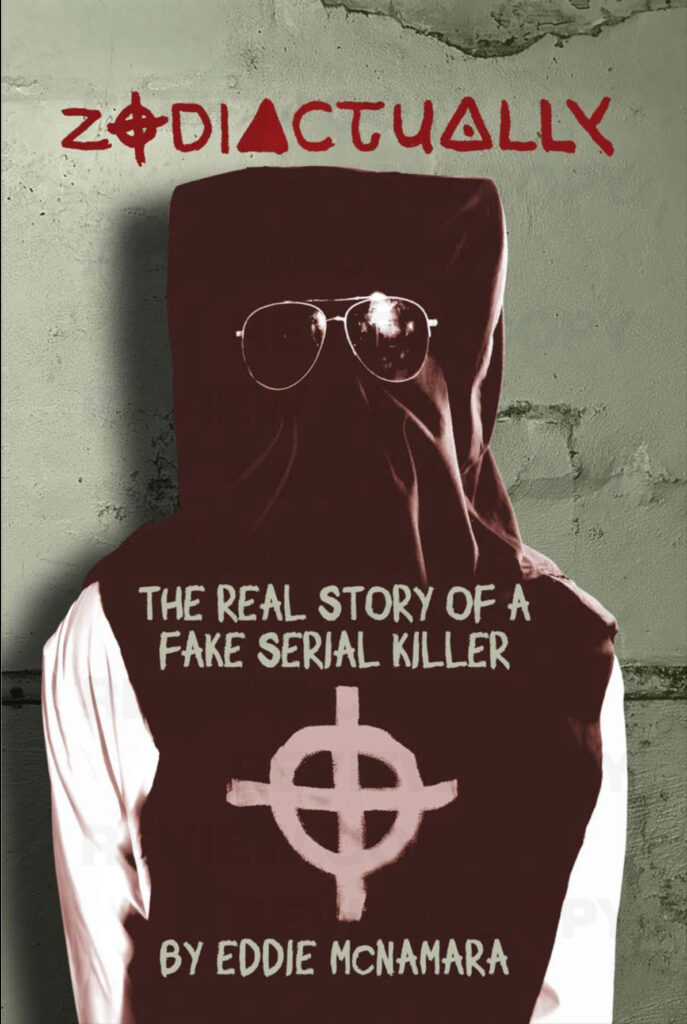
When I started reading, I was making thoughtful annotations, intent on keeping my thoughts in order. It was easy enough at first, but as the book went on, and the story got crazier, my notes got increasingly unhinged. One literally says, “ABSOLUTELY BONKERS,” another, “Are you fucking kidding me?” I told Eddie I read it all at once.
EM: Yeah, I think the way to do it is: Have a pot of coffee, pick up the book, and read it in one shot, and just guzzle coffee all through it. That’s the way to do it.
The book thoughtfully lays out each of the murders attributed to the Zodiac Killer and the investigations that followed (or, often, didn’t follow). This part of the book is pretty easy to digest. Cops didn’t want to put in hard work on a case where the suspect was already convicted of another murder. They didn’t want to push too hard on a case where several officers’ marriages might blow up because they were all sleeping with the victim.
EM: These guys are married with families. It’s like the worst-kept secret … everyone sort of knew, other cops knew. One detective said she [murder victim, Darlene Ferrin] was sleeping with three officers at the time of her murder, possibly including the first on scene. But he can’t be Zodiac, because he’s a terrible suspect, but he also was in the ambulance with her when the phone call was being made to the police, saying, “I’m the killer.”
(That guy’s story is even creepier, but we can be reasonably confident he wasn’t the Zodiac Killer, despite his wall of Zodiac victim photos – yes, really).
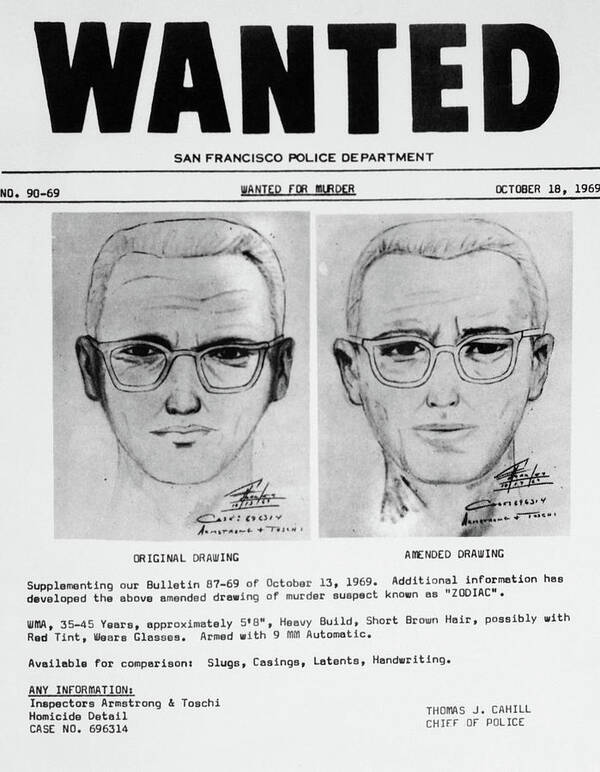
There’s laziness, incompetence, and the evergreen misogyny and racism* we’ve come to expect from cold cases. But these weren’t cold cases, exactly … right? The Zodiac Killer wrote the letters and took responsibility for the crimes! There was evidence! Real evidence, with DNA and all kinds of shit! Right?
The portion of the book covering Toschi, the lead investigator in the San Francisco Zodiac Killer cases, is where everything gets, to borrow from my notes, “ABSOLUTELY BONKERS.”
EM: That’s the movie they should have made. The movie about Toschi, the media cop who’s planting stories about himself [in the paper] and praising himself. That’s the really interesting stuff. The whole thing, to me, is an urban legend, start to finish, and I think Toschi, more than anybody, really made this into his case, where he’s the superhero battling the imaginary supervillain.
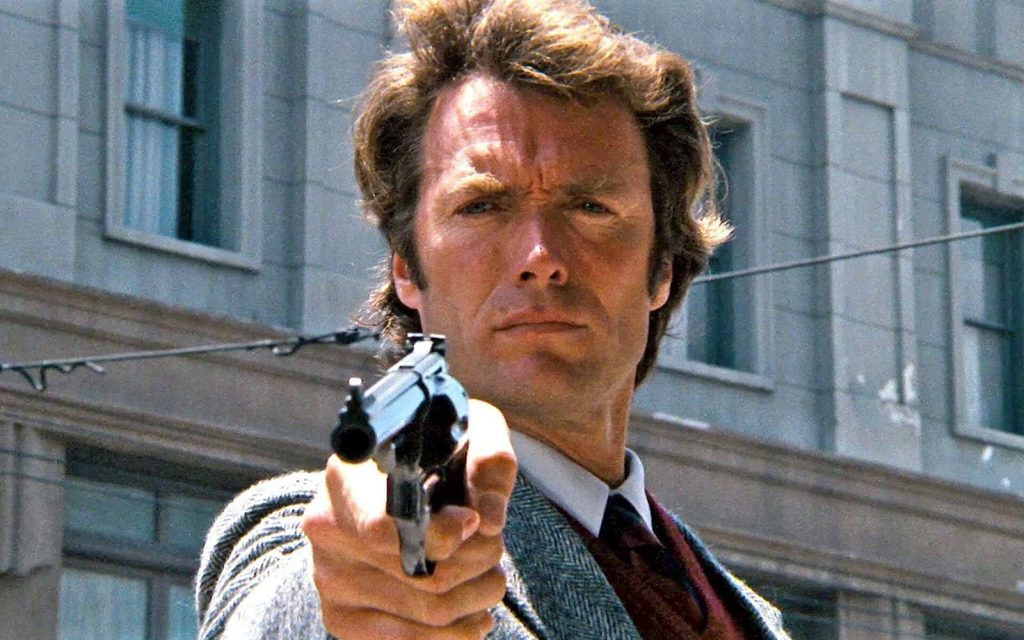
Now, Toschi, the cop who inspired the characters Dirty Harry and Det. Bullitt (yes, the Steve McQueen one) didn’t get this case until well after the Zodiac Killer started writing the papers, and the handwriting expert who examined every one of the letters confirms they’re all written by the same person, so what does Toschi’s obsession with fame have to do with anything?
To get that answer, and the ride of your fucking life, you’re going to have to read the book. But for some insight, let’s get back to Eddie.
EM: He’s [Toschi] a disturbed person, too, but even before it gets to San Francisco – that was October of ’69 – but from July, August, September, once the newspapers printed the July 31st letters in Vallejo and San Francisco, it became real in people’s minds.
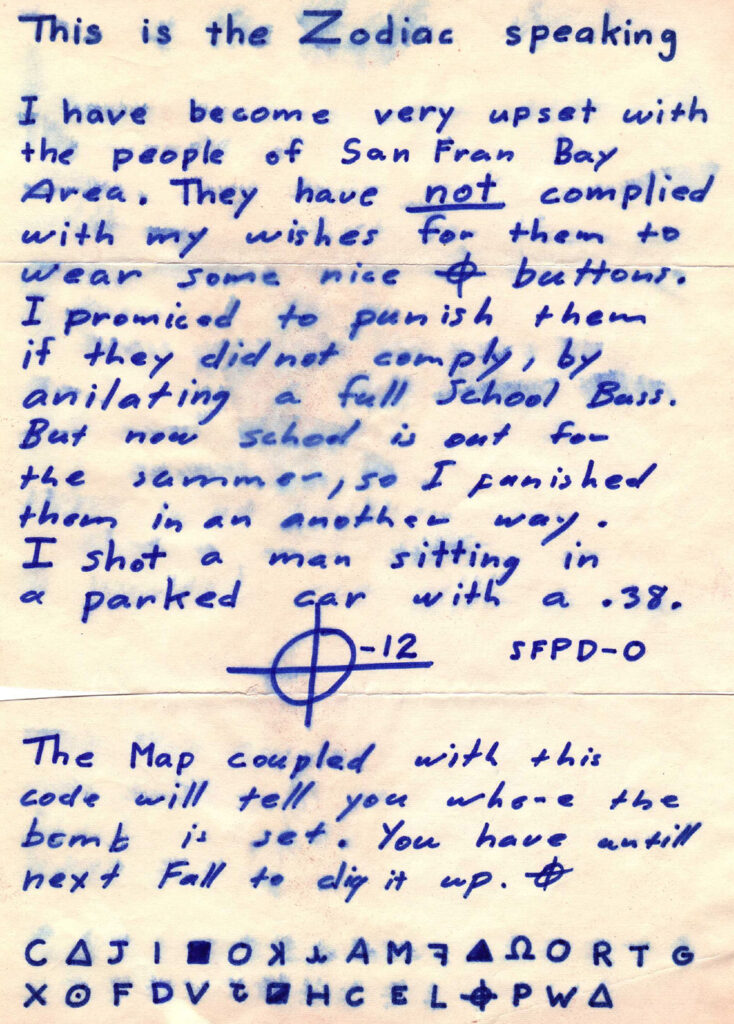
The book goes into great detail on the issues with the letters and their loose connections to the actual crimes, as well as the issues with the infamous letters that included a strip of the victim’s bloody shirt. (Again, you gotta buy the ticket and take that ride.) What is really interesting is the way the myth of the Zodiac Killer grew and mutated to keep up with the times. If we take Eddie’s thesis at face value – a fame whore lead investigator, cops who liked the easy answer, and papers that liked to sell papers inadvertently colluded with the weirdos writing letters to create a monster – how did it become, and stay, such a phenomenon even 55-plus years later?
That’s easy. As America’s fears changed, so did the story. And it’s a great fucking story.
EM: The Zodiac story, like Fincher’s story or Robert Graysmith’s book, is a great story. It’s way better than my story. My movie would never make $85 million at the box office. It’s a great story that appeals to a sort of Manson-era spookiness. Then, when we were teenagers and a little bit post-Satanic Panic, there was this whole idea of serial killers in popular entertainment. There are a lot of reasons why the Zodiac stories you know had legs over the years. [The story] becomes the end of the peace-and-love ’60s, which is totally not true: “The 60s were peace and love and then Manson and the Zodiac and [The Rolling Stones at] Altamont, and it’s all bad.“
… Like the September attack at Lake Barryessa, where the guy wears a hood and writes on the car door. It’s like he’s doing a mashup of the Tate-LaBianca murders and the Zodiac murders. And he’s much larger than the other eyewitness accounts. It just seems like such a copycat influence, a “ripped from the headlines” influence. Like he’s reading about Zodiac, he’s reading about what’s happening in LA and these spooky murders, he’s writing on the door, he’s using symbols, he has a disguise. You know, he’s dressed like an executioner.
… It’s a good story. And good stories are the ones that linger.
Speaking of stories, Eddie doesn’t shy away from calling true crime out for what it is – and isn’t. It isn’t “real crime.” Eddie discusses what he dubs the “true crime industrial complex” and how folks engage with it. Zodiactually rarely tells you what to think, asking you to draw your own conclusions based on the evidence collected and the research conducted, but there is a marked distaste for people who gleefully throw themselves into true crime entertainment without understanding that “real crime” is messy, tragic, and often not “a good story.” If anything, what makes the story of the Zodiac Killer myth so interesting is how everyone involved is an avatar for future true crime junkies diving headfirst into gruesome stories so they can feel involved, in control, and/or a part of something bigger than themselves.
EM: People will be stressing about something that’s out of their control in the world, something awful that’s happening in the world, or it’s time to pay your credit card bill, or time to wash the dishes. They’re very concerned with things that are outside their control, but the things that are in their control are sort of pushed aside.
Like the whole idea of someone who is, say, a Zodiac investigator. They’re trying to investigate the Zodiac crimes but their life is a fucking shitshow. And you know if they would just devote 1/10th of the time addressing the actual issues in their day-to-day that they spend on this fictitious case from 58 years ago, they would make some progress, and they wouldn’t have to send me nasty messages online.
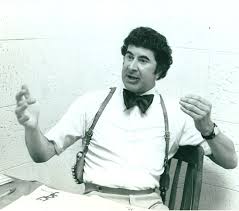
It wasn’t just Toschi, sitting in the movie theater watching Clint Eastwood play a cooler, more badass version of himself and deciding this fame train can’t hit the end of the line. There’s whoever sent the initial letters (the book posits that this was also a cop), the papers running the letters to sell, sell, sell, and experts of every kind showing up to show their importance. The handwriting expert, Sherwood Morrill, made a career out of being the guy who said all the letters that made it to the papers were legit.
EM: This guy is just as diseased as Toschi, and he’s Toschi’s friend. He’s even saying strange things like, “If Toschi wrote this letter, he’s the Zodiac,” which is a really weird thing to say. For years, even decades, even after this guy retired, he’s still talking about the 2,000 people he cleared in the Zodiac case, and only one person’s writing was similar. He says that he believes the Zodiac came to his house with a woman while he wasn’t there.
They’re [Merril and other experts] still trying to attach themselves to this story and be a consultant or be remembered as doing important work on this case, and it’s just such a mess.
Perhaps the biggest mess is all the victims who never had their case investigated because some loser made up a cipher that let the cops who didn’t want to do the work off the hook, and the cops who wanted fame go all in. Remember, not everyone attacked by the “Zodiac Killer” died. There are survivors out there right now who were attacked, shot multiple times (one in the face), and got absolutely zero effort from the police in solving their case. Those survivors have to live with the knowledge that their attackers, the murderers of their friends, are possibly out there, living free, facing no consequences for the baffling violence. And what of the women like Darlene? It’s easy to fall for the “perfect victim” fallacy, and Darlene was anything but perfect, but when she was lumped in with the Zodiac myth, she got exactly as much justice as “the good girls” who never got a full investigation, either.
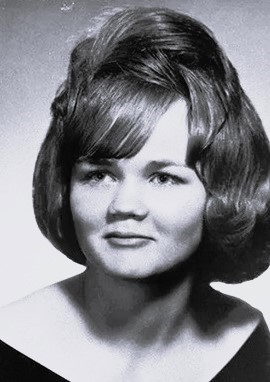
EM: Something that really bothered me, as I was studying the Zodiac and reading other cases these cops were involved in, was the amount of women, young women, who may not have been Suzy Homemaker in the ’60s, that were murdered, and there was almost never any justice for their killers. Like the strip club manager – She gets murdered, and nothing comes of it. The guy doesn’t get punished. The cop’s girlfriend who was shot with a .357 in the chest, feet away from her kids – they ruled that a suicide, wildly. They also tried to rule the first one a suicide, where she had “shot herself in the back of the head.” If somebody was not outside the law but outside the cookie-cutter way a woman “should be” for 1969, like a proper woman, they didn’t really work that hard on her case.
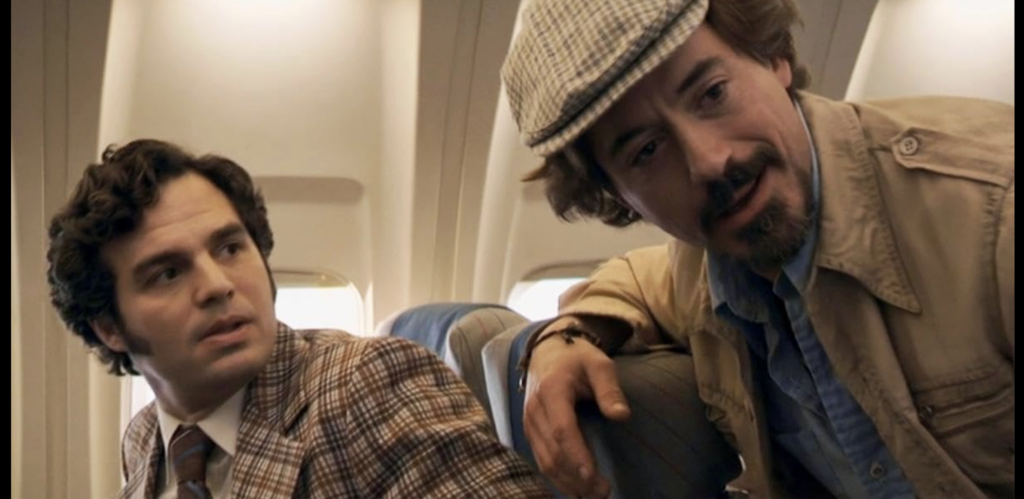
I could have talked to Eddie for hours about his book, and once you finish this wild ride – because believe me, when you hit Toschi, it is fucking wild – you’re going to want to talk to someone about it for hours, too (call us, babe). In a world where we commonly blur the lines between real tragedy and true crime, this book busts the myths, looks for the truth, and encourages you to do some self-reflection. It will also force you to come to terms with the fact that David Fincher used Mark Ruffalo and Robert Downey, Jr.** to lie to you, which is a pretty hard pill to swallow.
*Racism? How can that be? All the Zodiac Killer’s victims were white, right? Remember, the Zodiac Killer isn’t real. All “his” victims were victims of other people. But if we’re focusing on a killer that doesn’t exist, what happens to the murders that don’t fit?
** I am aware that Jake Gyllenhaal is also in this movie. Pick whoever hurts the most.