



Warning: This post discusses the death of a pet and subsequent feelings of grief. Reader discretion advised.
Picture it: Buffalo, NY. June, 2014.
I pack up my life and drive across the country to the Bay Area with nothing except my Subaru full of stuff and my co-pilot: my cat, Gomez, whom I’d adopted about two years prior after an old roommate gave him to me. (When I toured the place to move in with her, Gomez followed me around the entire apartment. We’d been basically inseparable since that moment.)
Cut to 2016: We do the same thing, and drive from California to Colorado together to start again, again. Eight years after that, Gomez and I made the trek from Colorado to the Midwest in a different Subaru, with my husband driving the U-Haul behind us. Didn’t matter where I was going; Gomez was by my side everywhere I went, literally in the passenger seat of the car for days at a time. For nearly 14 years, he was my constant companion.
Now, 2026: Gomez passed just a few days after he turned the ripe old age of 18 years young. To say it was heartbreaking would be a major understatement. It was rather sudden, extremely traumatizing, and the grief I’ve been going through has been completely overwhelming. I have been extremely Not Okay for over a month now, as he started showing weird symptoms at the end of March, and was gone by mid-April. I mourned before he was gone, and I’ve grieved every minute since he passed.
He was my best friend, the being I loved most in the world; the first creature to love me unconditionally, and that I got to love and take care of in return. My husband and I each mentioned in our wedding vows (unplanned) how even though I love my husband dearly, I love Gomez even more, and my husband would always be second in my heart. To say grief has knocked me sideways on my ass would be an understatement.
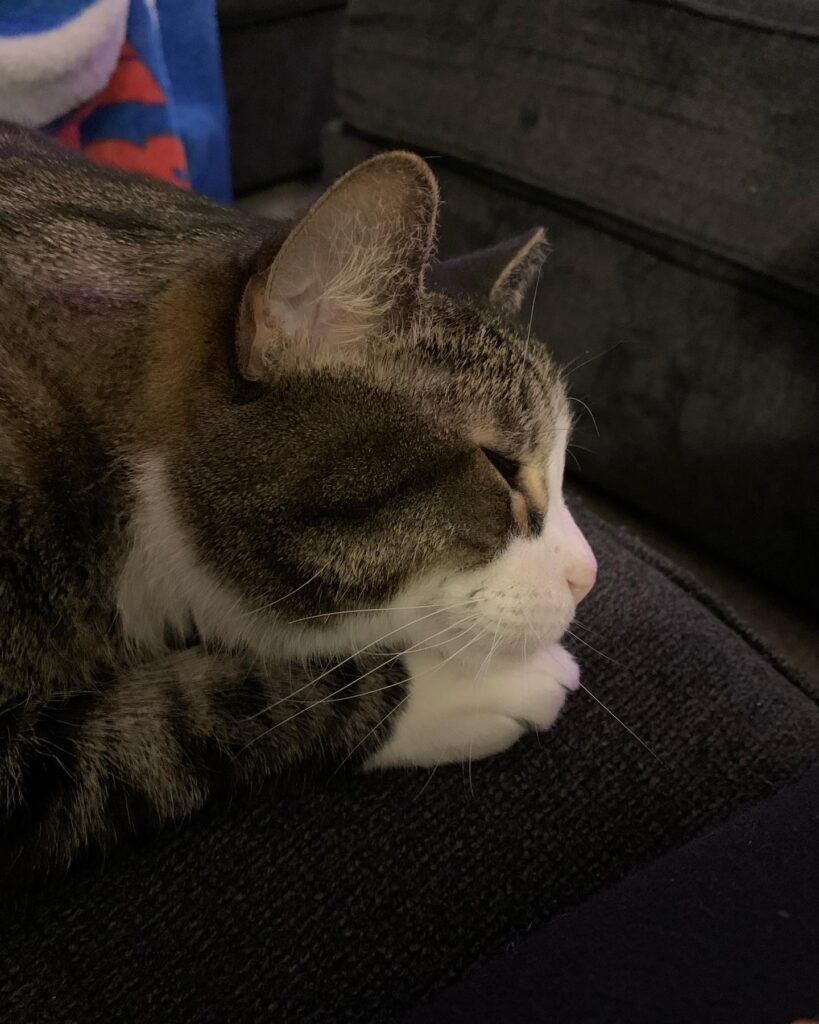
A mere four days after Gomez crossed the rainbow bridge, my husband left for a few days for a work trip across the country. I was properly alone for the first time ever in my adult life, at the worst time possible. Back in the day, there were roommates, or family members, or at least Gomie hanging out with me. Three days completely alone seemed impossible and terrifying.
I managed to distract myself, so the first day wasn’t terrible; plus, my husband didn’t leave until the afternoon, so I didn’t wake up alone. The next morning, I woke up alone, crying, absolutely shattered before the day even began. I knew that afternoon, when I got home from my day job, that if I didn’t have a plan, things would be very bad for me that night.
Naturally, I started talking with RA and asked for a distraction. She recommended that I watch the show Shrinking. This was not the first time she’d told me to watch it, but I hadn’t listened, as I am a serial re-watcher of the shows I already know and love. (Hello, neurodivergence. I sit here now with series seven of GBBO on in the background, thanks to The Roku Channel.) As it turned out, she couldn’t have made a better recommendation at a more perfect time.
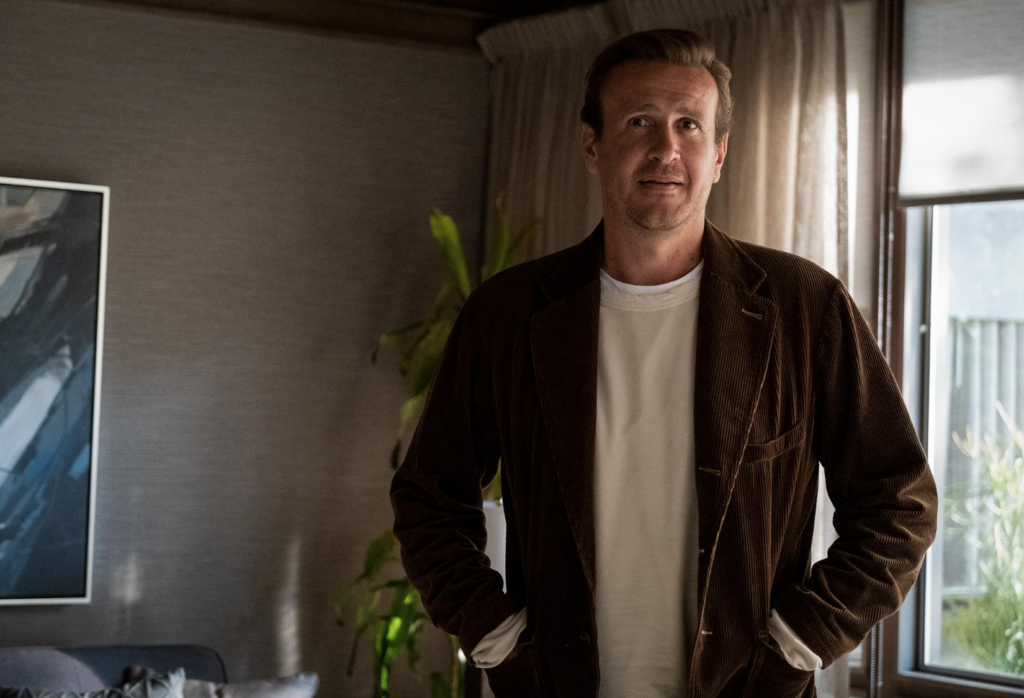
Shrinking opens on a middle-aged couple, Liz and Derek (Christa Miller and Ted McGinley1), being awoken in the night by what sounds like a raucous party outside their house. She tells her husband it is “his turn,” letting us know this is not unusual. She ends up going to see what’s going on herself. She finds her neighbor Jimmy (Jason Segel) is up in the middle of the night blasting music, doing drugs, drinking heavily, and he has two younger women2 swimming in his pool. With some sharp looks and humor, she convinces him to shut up after asking him where Alice is. He says she’s asleep upstairs, and the party ends.
The next morning, we see him stumble into the kitchen, where a young woman is cleaning up empty liquor bottles and general post-party detritus. She hands him his breakfast of overnight oats that she clearly prepped herself, and Jimmy says, “Thanks, Alice.” Alice is his daughter, and this is confirmed when she flips over a picture frame that had been turned face down, and we see Jimmy, Alice, and the woman who must be his wife. Someone pin the Father of the Year award on this man! Liz gives Alice a ride to school. Jimmy goes to start his car, only to find out he’s out of gas. He rides a bicycle wearing one of Alice’s helmets and ends up at the cognitive behavioral center. Oh, good, he’s going to therapy. He clearly needs it.
But surprise! He is the therapist! Now he’s hungover, massively depressed, and has to listen to other people’s problems all damn day.
Clearly, Jimmy is not doing very well. While I was not coping similarly at that moment (my drug of choice that night was sushi), I recognized someone grieving. Rather, I recognized the burial of grief under layers of drugs and hot younger women. Avoidance and numbing are widely used for a reason: They work … at least for a while.
I won’t recap the rest of the episode for you, but I will go over the general gist of it and the first season. Jimmy’s wife died a year prior in a car accident, and he’s been grieving selfishly ever since. He hasn’t looked after his daughter or himself in that whole time. Alice is a teenager, so somewhat self-sufficient, but she is grieving, too. The neighbor, Liz has stepped in, somewhat overbearingly yet understandably, to be the parental figure Alice needed after her mom passed and her dad checked out entirely.
The rest of the season is dedicated to Jimmy’s attempts to come out of the cloudy fog of avoidance and grief he’s lived in for a year; to be a better therapist with new, unusual, and possibly unethical methods (that he hilariously calls “Jimmying”); but most importantly, to be a present, active, engaged parent to his daughter. The overall moral of the story? You can’t do it alone. You need your support system of loved ones around you to help you through the bad times. Simple? Yes. Truthful? In my experience, abso-fucking-lutely.
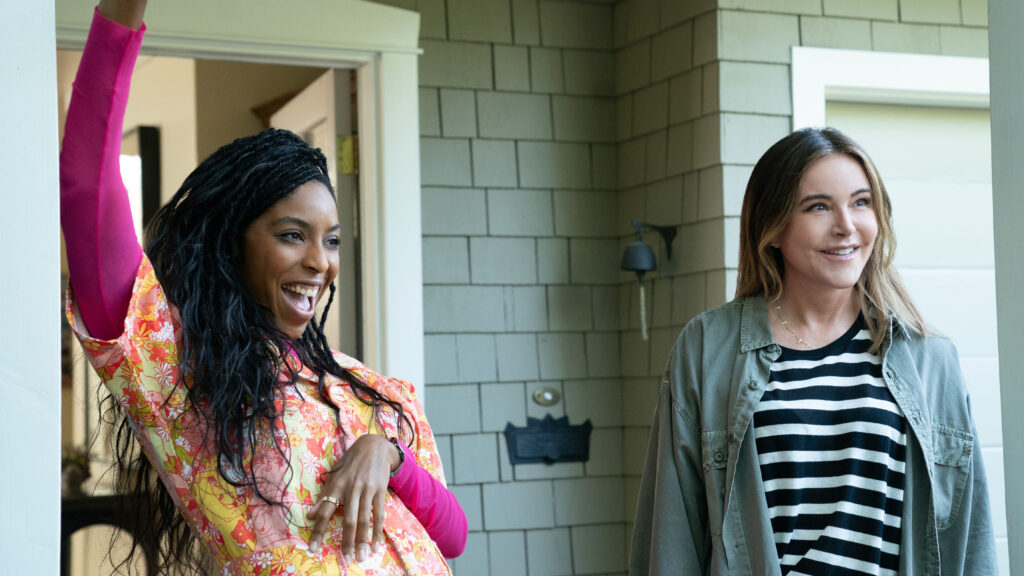
Jimmy’s lucky enough to have Gaby (Jessica Williams, who I LOVE and was so happy to see on this show), his fellow therapist in this practice and one of his best friends, along with his mentor and practice owner, Paul, the grumpiest old man (Harrison goddamn Ford). There are lots of storylines and other excellent supporting actors (Michael Urie! Wendie Malik! Lily Rabe!). The writing is quick and unexpectedly funny in ways that remind me of Forgetting Sarah Marshall; the acting is great; the cast is stacked. (Editor’s note: I was mostly telling Nicole how much I wanted Harrison Ford to be my grumpy grandpa, but I did mention it would be a worthwhile comfort show. – RA.)
All of these things combined helped me in my dark, early grief days when just making it to and from work was so exhausting I’d have to nap once I got home, completely drained from a few hours of pretending everything was fine when it absolutely wasn’t. Laughing felt like a completely new experience. Seeing others grieve, even if they were just actors on a TV show, helped me feel less alone. Plus, it gave me the greatest advice I hadn’t heard before: fifteen minutes of grief.
This advice does not work as well in the very first days of mourning, but after a little time has passed, the fifteen-minute technique Paul recommends is something I’ve used to help me process my emotions when they overtake me. Basically, you set aside fifteen minutes of your day to feel your grief in all its complexity. You set a timer, blast sad music, put down your phone, and let your body express its wounded animal instincts as intensely as you can. Don’t just sit and think, “Wow, I’m sad,” cry until you scream. Punch a pillow. Go outside and break a dish if you have to; just do something that feels right and in line with your grief for fifteen minutes. When the timer goes off, you stop and carry on with your day.
We see both Jimmy and Alice do the fifteen minutes throughout the first season, to varying degrees of success (though Jimmy riding a bicycle and screaming “Fuck you, Phoebe Bridgers!” while listening to “I Know the End” was extremely funny AND accurate, IMO). While I might not always set a timer, I’ve made it a point to really feel the feelings as they’ve arisen. Hiding and burying them will not help me; processing and understanding the depth of my feelings, however, lets me acknowledge the deep well of grief that springs from the enormity of the love I still feel for my favorite being.
For example: I came home the other day and saw his cat bed and lost my mind. I fell to the floor and threw myself on it, sobbing, screaming that I wanted him to come home. I stayed down there for about fifteen minutes just feeling the depth of how badly I missed him, how unfair it was that he was gone, how I’d give anything to pet him again, and then I sat up. I picked off his hairs that are still everywhere around our house and put them in the little bowl where, yes, I am collecting them, like a sane and stable person. I continued with my day. The ache that had been building in my chest all day had left me, at least temporarily. I’d acknowledged my grief in the way I needed to. Was my grief completely gone? No! But did I feel better for a few hours? Abso-fucking-lutely.
Grief is a universal experience, but it hurts like hell and has a way of isolating people when they most need community and support. Nobody wants to feel like a burden, and that’s exactly what grief feels like. You’re a burden to yourself, so how can you possibly be loved by others? Turns out, the people who love you will support you in good times and shitty times, too! You just have to admit you need help, which is something else Shrinking‘s take on grief covers excellently. If you don’t express your feelings and needs, how can anyone else possibly meet them? Watching these characters express their myriad needs in such different but honest ways has been strangely liberating. I can ask for what I need! I can listen to my body! I can laugh amidst the heartache!
Being honest about going through a really devastating time meant that my loved ones could show up for me in ways I didn’t even know I needed. Without the love and care that’s been so freely given to me by my people,3 I don’t know that I would even be able to write about this now, just shy of a month later.4 So if you are also grieving right now, let me remind you that it’s okay to not be okay and to ask for what you need, even if what you need is to collapse on the floor and cry so hard you dry heave. (Been there, quite recently!) When you’re ready, pick yourself up and maybe watch some Shrinking? It might help you feel a little less terrible.
- You likely know Christa from Scrubs as Dr. Cox’s ex-wife, Jordan. Since that show has ended, she’s had plastic surgery and also aged, just like the rest of that cast, because it’s been 16 years since that show finished airing the first time around. (Tell me Zach Braff hasn’t had plastic surgery and I’ll laugh in your face.) I say this as I’ve noticed a lot of discourse about her/her face on this show, to which I say: Shut the fuck up. Also, she is perfect on this show, and her plastic surgery fits right in with her character. Ted McGinley, who plays her husband, has also had noticeable plastic surgery, and nobody says shit about that. Bite your tongue and mind your business, mmkay? ↩︎
- Obviously, in their late 20s/early 30s or so, when Jason is now in his late 40s, so thankfully not overtly creepy, but they clearly are not his age. ↩︎
- Yes, including my therapist. ↩︎
- Don’t get me wrong, it’s still very painful, and I am very much in the midst of grief. I still can’t look at pictures of Gomez. I still cry and wish I could hold him in my arms again multiple times a week. It hits me hard and usually by complete surprise, though at times I can feel it building in my chest, like a hole burning through me from the inside out. ↩︎