


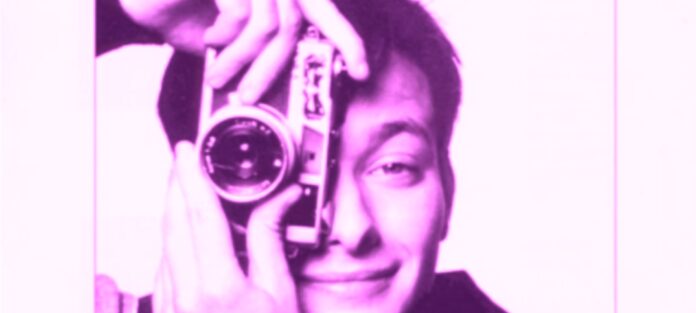
John Waters is famous for making absolutely disgusting movies. Think: Pink Flamingos, Female Trouble, Multiple Maniacs. In the late 1980s and early 1990s, he found commercial fame and broader appeal with Hairspray (which later became a hit Broadway musical and then another film of the musical version, also directed by Waters) and Cry-Baby. There’s the cult classic Serial Mom, where Kathleen Turner kills with looks and also knives. “But I’m gay and/or weird; I’ve already seen all of these,” I hear you say. Or maybe, “I don’t want to watch a totally disgusting movie.” Fantastic! Then let me introduce you to the John Waters film absolutely nobody else remembers:1 the surprisingly heartwarming Pecker.
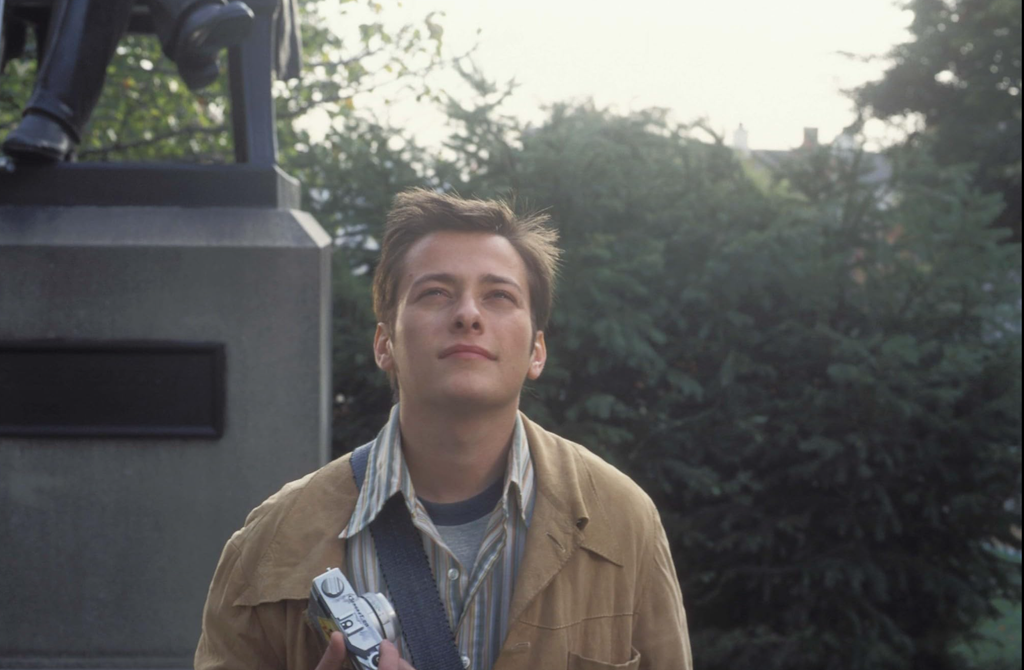
Pecker, as (almost) always for a John Waters movie, is set in a rundown part of Baltimore. Edward Furlong is the eponymous Pecker, so named because as a child he didn’t eat, only pecked at his food. We never learn his Christian name; every single person in all of Baltimore, later New York, and the world calls him Pecker. His mom runs a thrift store and has a real passion for helping houseless people look and feel good even if they have no money. Right next door, his father runs a bar, but business has been bad ever since the strip club full of lesbians who berate men while they strip down and show full bush (aka the Pelt Room) opened across the street.2
Pecker is a photographer. He constantly takes photos of everyone and everything around him. Most people pose willingly, even if they’re flipping him off. Pecker does, unfortunately, take clandestine photos of people who aren’t aware they have become his models. Most infamously, he takes photos through a side window at the Pelt Room, where he manages to get a close-up shot of a very 1970s bush on a very angry lesbian stripper. Naturally, when Pecker hosts a gallery show where he works at The Sub Pit, an agent from New York named Rory (Lili Taylor) shows up and buys a picture. She’s obsessed with Pecker and offers to represent him and give him a real show in New York.
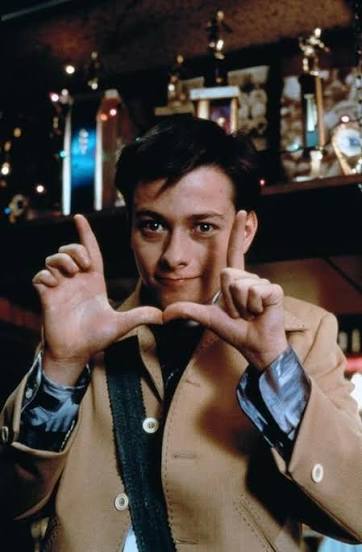
Unlike a lot of Waters’ protagonists, Pecker is downright sweet. He loves his mom (Mary Kay Place), dad (Mark Joy), his older sister Tina (Martha Plimpton!!!), his sugar-obsessed sister Little Chrissy (Lauren Hulsey),3 his delusionally religious “memama” (Jean Schertler), his girlfriend Shelley (Christina Ricci!!!!! though I feel she’s sadly miscast in this movie but who cares it’s Christina Ricci!), his best friend Matt (Brendan Sexton III), and everyone he sees.
At one point, discussing one of his photos with Matt, who says the girl in it is ugly, and Pecker replies that he thinks she looks strong and tough. Pecker takes pictures of everything because he finds everything around him interesting and beautiful. Matt is a thief by profession, but Pecker doesn’t care. “Matt’s a thief, but he’s a really nice person!” Pecker explains at one point. He sees the beauty everyone else seems to miss in both the people and places he sees every day.
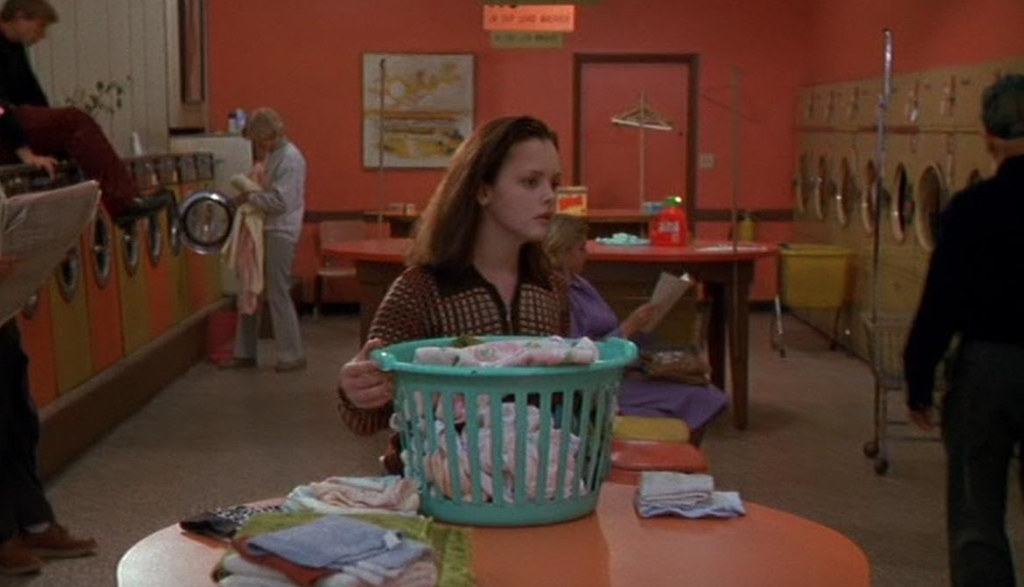
Pecker has an almost Pee-wee Herman quality to him, all sunshine and rainbows even though he’s living in poverty in Baltimore. Everyone he knows is wonderful; everything he sees is worthy of being photographed. He just happens to be the person who notices the beauty in burgers being cooked on a flattop stove and thinks to take a picture of it.
“Nicole, is this really a John Waters movie?” I hear you asking. “It sounds saccharine and not at all what I expect from the man who made Divine take a bite of dog shit.” I know! I promise, a man does hump a washing machine! This movie is easily seen as a self-insert for John Waters. He is Pecker, the kid who ran around documenting the weird beauty of Baltimore, who then got noticed by the pretentious art world and became famous, but all he wanted to do was show off the beauty he saw around him on his own terms. Unlike the snobby NY people in the film (and likely IRL), Waters/Pecker is not looking down on the people he documents; he has a genuine love and affinity for those people and for Baltimore.
But I promise, there are things that absolutely make this a John Waters movie, and that made it completely inappropriate for me to watch at such a young age. The first time I saw Pecker was around the time it came out on VHS, which would have been late 1998 or early 1999, making me 10 or so years old. Fantastic parenting is a tradition in my family. Anyway, the whole plot with the Pelt Room is classic Waters, and Pecker’s dad is obsessed with shutting down the bar and has many one-liners throughout about the danger of pubic hair. “Pubic hair causes crime,” and, “Pubic hair is against the law!” are two of my personal favorites.
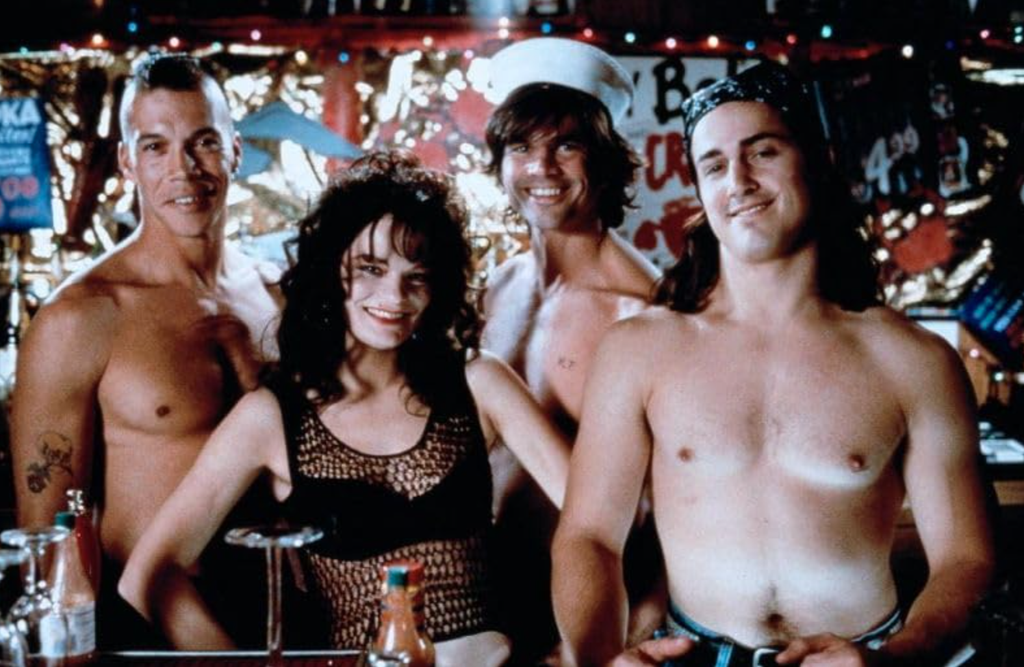
Tina, his older sister, works at a gay bar called the Fudge Palace. Men dance on the bars while they strip down to various types of underwear, everything from loose boxers to full-on jockstraps (thankfully, not loose ones). Tina announces them all, like when a hot guy with a sailor hat (see above) is strutting/dancing down the bar: “This is Seafood Sam the Sailor Man. He may be straight, but he’s on leave, so don’t ask, don’t tell, just get him to a hotel.” Brilliant. Tina also adamantly announces that there is “no teabagging” but the men do it anyway. Pecker, of course, gets photos, and those photos are how the straight people of Baltimore and NY learn about teabagging. Downright educational! At one point, while riding the bus, Tina asks a man, “Are you a homosexual?” “No,” he responds. “Well, you wouldn’t understand, then,” she says as she turns to ignore him.
Of course, fame isn’t everything, which Pecker learns once it descends on him, his family, and his photography subjects overnight. He goes from being an annoying but beloved neighborhood nuisance to the cover of newspapers and art magazines, selling prints and photos almost faster than he can take them … except it’s almost impossible to take them anymore. Nobody wants to let him take their photo; his family’s house is robbed by a former photography subject/local that Pecker knows; CPS comes in and puts Little Chrissy on Ritalin; his older sister loses her job. What are they to do?
The ending is, as mentioned, surprisingly wonderful. Obviously, I’m not going to spoil it all, because if you are a John Waters fan, you should watch this movie. Even if you’re not a John Waters fan, this film is almost John Waters Lite: It’s not quite as “family-friendly” as Hairspray and Cry-Baby are, but it’s not as fucked up as Desperate Living or Polyester. It feels like a good litmus test movie to see if your friend who loves Hairspray but has seen no other John Waters movie could handle something a little freakier without jumping straight to Pink Flamingos, plus it’s available to rent on Amazon. Do they laugh at the “shopping for other people” scene, or are they a square? Would they go to the Pelt Bar or the Fudge Palace with you if they existed IRL? There’s your answer. Just maybe skip showing it to your adolescent children, unless you want them to grow up and co-run an alternative, queer, feminist online magazine in their thirties (Editor’s note: I mean… you do, don’t you? -RA).

- Per my research, which has consisted of me asking every other John Waters fan I know if they remember this movie, and every single one has said, “No.” ↩︎
- Honestly? Dream job. ↩︎
- There has to be one majorly fucked-up character in every one of his films and, for me, in this one, it’s undoubtedly Little Chrissy. She doesn’t say much, but every time she’s on screen, I was very disturbed. You’ll understand when you watch. ↩︎