

Two by Lucio Fulci, the Italian horror virtuoso who looked at logic and put as much distance as he could between it and himself. Many of Fulci’s chaotic, violent films could have made the final Video Nasties list, but only The House by the Cemetery (1981) and Zombie (1979) actually did. Okay, Fulci’s The Beyond was on the Dropped 33 list (signifying Nasties that weren’t prosecuted successfully or at all).
The House by the Cemetery is the third of Fulci’s Gates of Hell trilogy, following City of the Living Dead and The Beyond. The films are thematically similar but not otherwise connected. It contains one of the great bat puppets of cinema.
Zombie is the movie’s US title; in the UK it was called Zombie Flesh Eaters, and in Italy it was known as Zombi 2. Zombi (the first) was the Italian title for the European cut (supervised by Dario Argento) of George Romero’s Dawn of the Dead. In Italy, you could slap a 2 on a title and pass a movie off as a sequel, even if it wasn’t one officially. This is why Terminator 2 (directed by Bruno Mattei in 1989, not James Cameron in 1991) and Alien 2 existed in Italy, and why Zombi 2 is an unrelated sequel-in-name-only to Dawn of the Dead.
After a few years of cut video releases, House was issued uncut in 2009, while Zombie got an uncut video debut in 2005.
Woe be unto anyone who watches a Lucio Fulci film expecting it to make sense. Fulci’s fans will admit this, and assure you that’s the point. We have gone through the looking-glass, entered a reality where people suffer baroque, elaborate demises because the narrative needs a crescendo at that point, like a bunch of spiders snacking on someone in The Beyond. My advice: Just let go and let Fulci cook. Let go of the need to make sense of it all, as though you were in school and obliged to deliver a clean synopsis of the chaos. You’re not. Nobody is going to ask you what House by the Cemetery means.
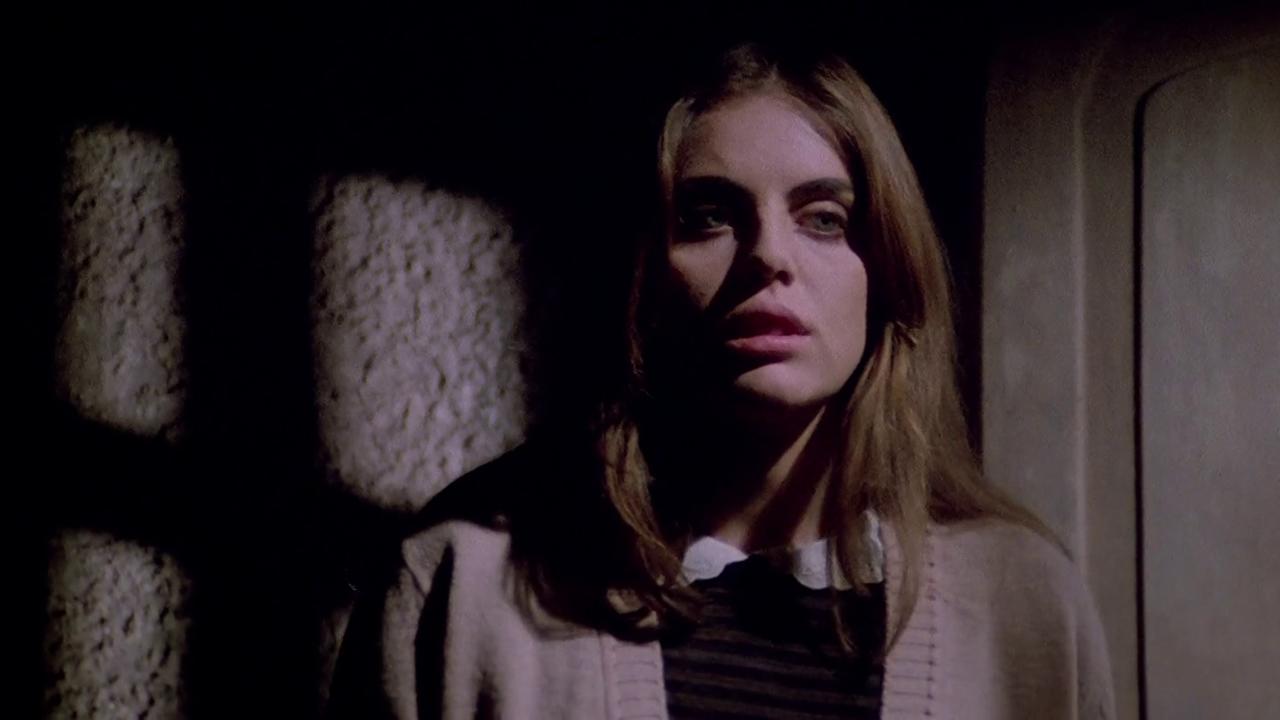
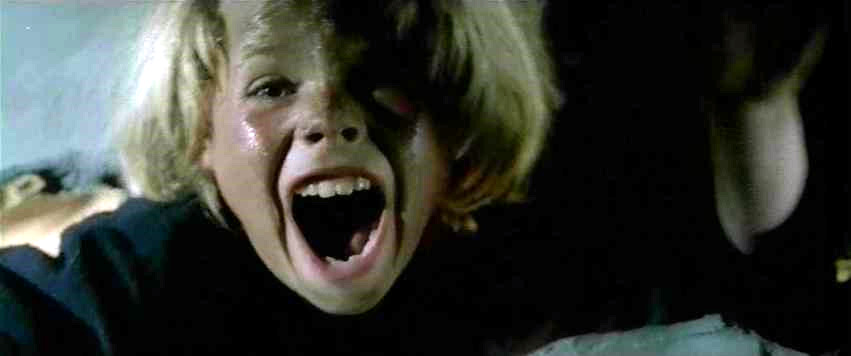
It means a lot of creaking basement doors and “suspenseful” dawdling until the inevitable gory crescendos, and it has to do with an evil 150-year-old mad scientist whose face has mostly rotted off over the years, and who kills anyone he encounters in order to use their parts for rejuvenating essence. (Why he would want to live that way eternally in a corpse-laden, cobwebby cellar is one of those things you shouldn’t really think about.) A family moves into the old house where all this happens; the father is doing research on the mad scientist, Jacob Freudstein, the mother is an uninteresting screamer, and their little son Bob is one of the most annoying kids you’ll ever see in a movie. (His voice is dubbed by a woman.) Bob makes friends with a little girl who might be a ghost.
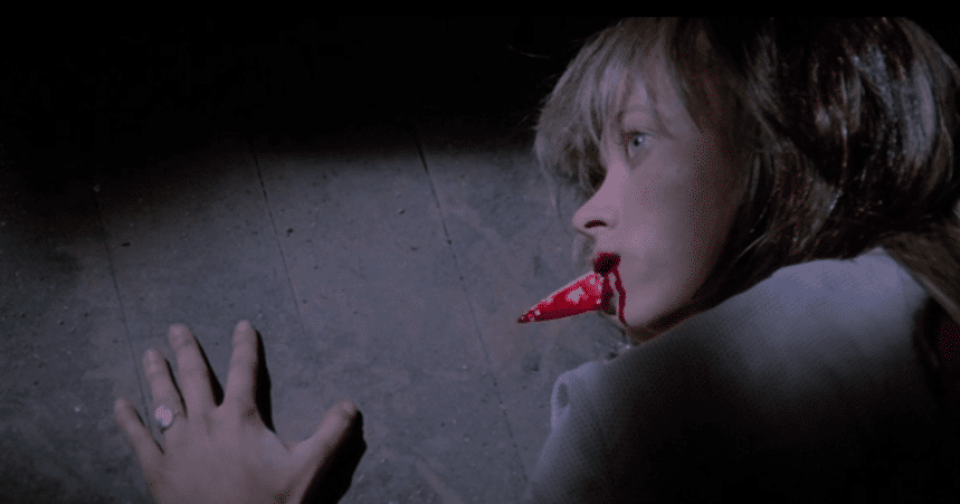
After a while (I checked my watch a few times) the gratuitously prolonged bloodletting starts, killing off most of the small cast. Like At Midnight I’ll Take Your Soul, House by the Cemetery has the ooh-spooky aesthetic of a small-town haunted-house attraction, with carpets covering tombstones and copious cobwebs festooning ripped-apart bodies. The aforementioned bat puppet attacks the father, biting the crap out of his hand before he hacks it to death with a knife.
The movie has style, but it’s crude and obvious in a lot of ways, starting with the money scenes. The kills are lingered over Italian-style (by now it should be clear why so much Italian exploitation made the Nasties list), the camera fixates on every bubbling spurt of blood — most of the hits are to the throat. Despite all this, the film is dull and perhaps warmly remembered only by those who saw it at a tender age. Seeing it today for the first time as an adult feels somewhat hollow. It plays as though it were constructed to deliver a bloodbath every twenty minutes, but those twenty minutes crawl by, because Fulci has no particular style in the non-gory/spooky scenes. He may have figured, why put much effort into these expository scenes when the audience is there for the splatter?
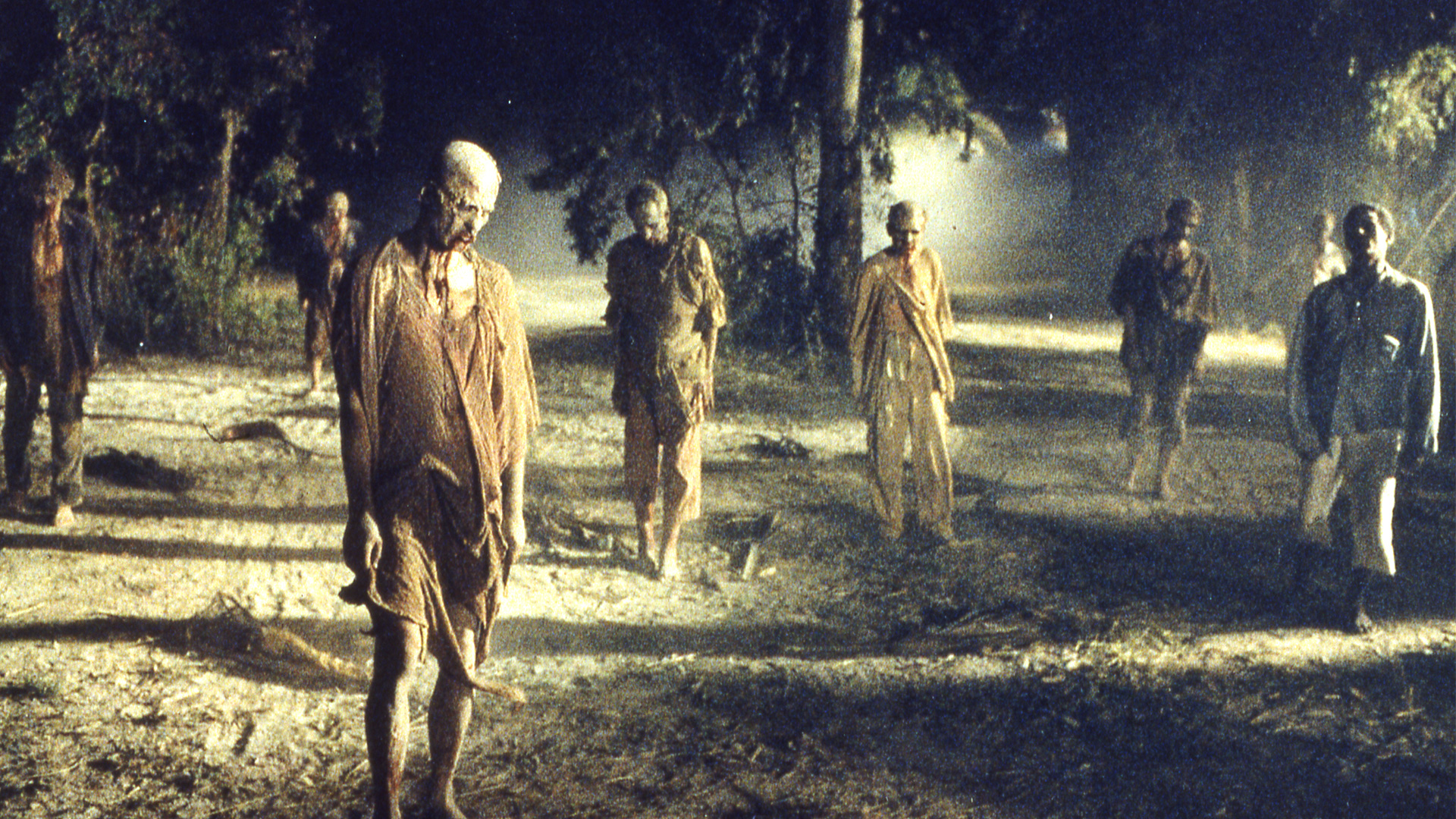
Zombie is something of a different story. It begins with a literal bang, as a sheet-clad flesh-eater is sent to Valhalla via a slug to the dome. The World Trade Center towers stand proudly in credits footage shot in New York harbor (the buildings weren’t even a decade old when Zombie was filmed). It sets the scene, though we’re only in New York at the beginning and end — the ending suggests the dead take over the city and, by extension, the world.
If only Zombie retained that skill at getting down to business. Already a pretty short movie, it could’ve been about 45 minutes long if Fulci had moved his ass a little. A lot of the scenes go on and on, and we don’t get the sense that the length adds anything. Our heroes are West (Ian McCulloch), a reporter, and Anne (Tisa Farrow of Anthropophagous), whose father owns a sailboat that has drifted into New York harbor unoccupied except for one (1) zombie. West and Anne find out her father is on a “cursed” island, Matool, and when they go to hire a boat to take them there, the boat’s wary owner makes the exchange twice as long as it needs to be.
If you were a woman in this movie and you weren’t Tisa Farrow, you were showing your boobs, and the gratuitousness is sort of funny. There’s a topless scuba diving scene that somehow leads to the film’s crowning moment of badassery, when an underwater zombie (they’re dead, so no need for oxygen) takes on a shark. Okay, I approve of Fulci’s lingering over the zombie-v.-shark stuff because you’re not going to see it anywhere else (even though the scene was allegedly filmed without his knowledge!), and the zombie actor, in real life a shark trainer, acquits himself nobly. The other topless scene leads to the film’s other celebrated bit, when a woman is pulled onto a long splinter of wood eye-first.
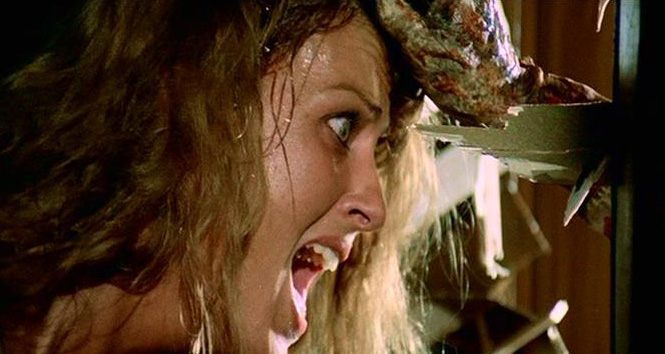
There are a few things to say about these two highlights. First, they work even today because you know computers weren’t involved. That’s a real guy down there with a real shark, faking the shark having a chunk bitten out of it before it reciprocates by chewing the zombie’s arm off. Today’s CGI (or, feh, AI) could fake this face-off more elaborately. But it would be CGI, we’d know it, and it wouldn’t feel real. Fulci didn’t actually enucleate an actor’s eye — a somewhat obvious latex face stands in for the gnarly stuff — but again, CGI could show it so much gnarlier and it wouldn’t faze us because it wouldn’t feel real. There’s still something about actual things and people that were on an existing set that carries physical weight. We can handwave the effects not looking 100% real as long as they feel real.
That’s also true of the ending, which famously shows zombies en masse crossing the Brooklyn Bridge while cars zip by on either side. Again, we can sort of blot out the evidence that Fulci couldn’t get the entire bridge shut down and focus on the visual of zombies infesting New York, unstoppable according to the radio. As was said somewhere else, they get up and kill; the people they kill get up and kill. I just wish there wasn’t so much padding, or the padding was at least more engaging, because of the parts that feel real and stick in a horror fan’s memory.
House by the Cemetery and Zombie are free on Tubi.