


In 1980s Britain, certain grindhouse flicks could not be shown in theaters without extensive cuts due to extreme violence. There were 72 videos — the worst of the worst — that were, for all intents and purposes, banned in the UK. Later, they were released uncut on home video, where BBFC1 certification wasn’t necessary. These were the “video nasties.” Eventually, the list shrank to 39 videos, which we’ll cover here.
Our first stop spotlights the first two movies on the list alphabetically, Absurd (1981) and Anthropophagous (1980).
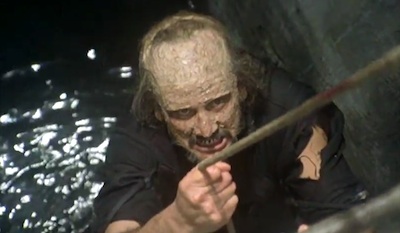
The alphabetical relationship isn’t why we’re pairing them here, though. Absurd is a spiritual sequel to Anthropophagous, though they’re not actually related. They do, however, share a director (“Joe D’Amato,” born Aristide Massaccesi) and actor (“George Eastman,” born Luigi Montefiori, who just died this past May). D’Amato and Eastman co-wrote Anthropophagous, while Eastman wrote Absurd.
More recently, the cult-boutique physical-media outfit Severin Films has bundled together the two films as the box set Fear the Reapers: The Anthropophagous Films of Joe D’Amato and George Eastman. It’s expected to go on sale sometime this summer, with the usual raft of extras.
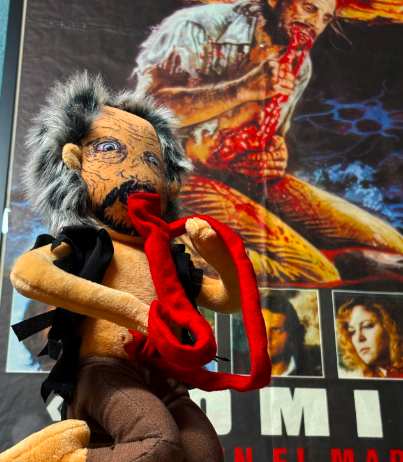
Oh yeah, and Severin has also put out an Anthropophagous plushie. It depicts the film’s killer in a re-enactment of the climax, in which he rips out his own guts and … well, eats them. (Unlike the salty prives in Full Metal Jacket, he doesn’t ask for seconds.) Is that a spoiler? Not really, the image has been on posters and DVD covers for years.
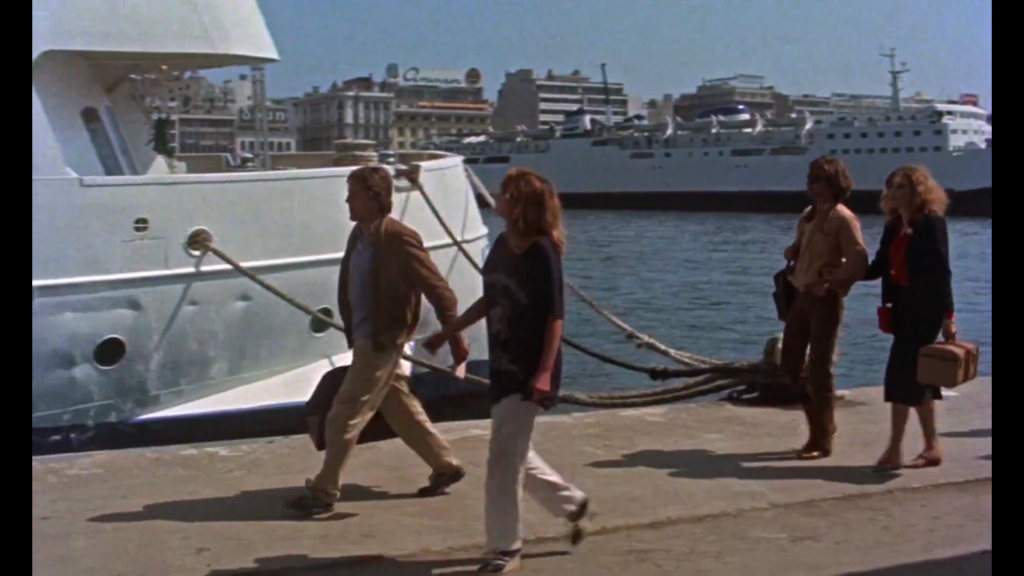
Unfortunately, for all its notoriety, Anthropophagous moves more slowly than a slug across an acre of flypaper. We’re about an hour into it before we start getting close to the money scenes, the bits that made it one of the heavyweight Nasties. Before that, there’s a lot of atmosphere (it unfolds on a mostly-deserted Greek island) and zoom-outs, terrible dubbing and walking around, and someone’s severed head in a bucket.
A group of tourists arrive on the island, where dwells a cannibalistic killer. The tourists’ boat is called the Saudade, a Portuguese word meaning longing for those absent or deceased. Eventually, we get a tragic backstory: the flesh-eating psycho was once a family man, Klaus Wortmann, stranded on a life raft along with his wife and young son. When the son died, Klaus reasoned that he had no choice but to eat the boy; the wife resisted, he accidentally stabbed her to death, and he went crazy (and, we assume, ate his wife and kid). Now he haunts the island, killing and munching on people, leaving their rotting remains to the catacomb rats and maggots. Yet he has an aura of melancholy about him; he embodies saudade if nothing else. Who knows, maybe Klaus’ origin story influenced Thomas Harris when he ill-advisedly sat down to explain what was wrong with Hannibal Lecter.
Joe D’Amato was a prolific director, but that doesn’t mean he was much good at it. He and Eastman came up with a couple of whopper scenes, though, and the film’s reputation rests on them. Late in the movie, a pregnant woman falls into Klaus’s clutches, and what follows is a good way to tell if you’re watching the uncut version. Klaus strangles her, then reaches up into her and seizes her fetus, which he rips out, placenta and all, and eats while her fatally wounded husband looks on helplessly. The other moment finds Klaus disemboweled with a pickaxe, whereupon he reaches into his belly and pulls out his own entrails to feast on. (The undramatic plop he makes when he finally keels over made me bark with sudden laughter.) Both of these gross-out favorites were cut from home-video versions for years.
Tisa Farrow, who died two years ago, starred in Anthropophagous as the Final Girl. She was one of Mia Farrow’s sisters and is known mainly for three Italian gore films she was in, two of which were Nasties (Lucio Fulci’s Zombie was the other); the Vietnam film she did, The Last Hunter, was never formally prosecuted but was confiscated just the same. Mia has no such claim to fame, even if she got the acting talent that passed Tisa over. This isn’t a film marked by great performances anyway, so Tisa fit right in. George Eastman, who stood three inches shy of seven feet, makes an imposing killer, though I swear that right before his most disgusting moments, he hesitates a little, as if thinking “Damn, it’s one thing to write this shit, it’s quite another to perform it.”
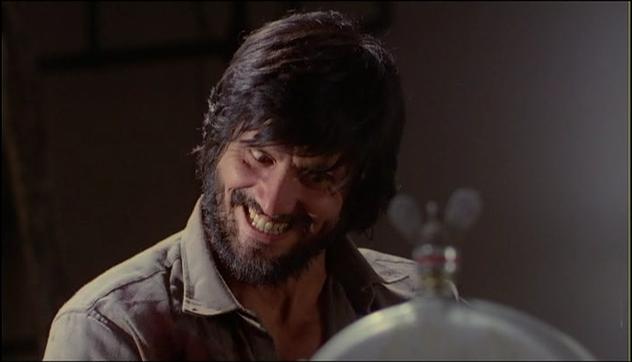
Eastman returned as another killer in the following year’s Absurd, which D’Amato filmed in English for the world market. People seem to prefer Anthropophagous to Absurd, maybe because of its splattery lowlights, but I liked Absurd more. That might have to do with its vibe that’s as if M. Night Shyamalan remade Halloween but didn’t skimp on the gore. Eastman plays Mikos, the subject of experimental therapy that gave him near-magical healing power but also drove him crazy. Klaus and, later, Mikos are essentially victims of dire circumstances; they took serious shots to their sanity but didn’t set out to be evil. Of course, the victims of Klaus/Mikos’ brutality might have a riposte or two to that theory.
Mikos is running from some sort of priest/doctor whose lab he escaped from. He reaches the gates of a house and disembowels himself on the finials, but he recovers in record time, because healing factor. In this house lives a family: husband, wife, obnoxious little son, and a teenage daughter lying in traction. Even after Mikos almost kills himself on their gates, the parents stupidly go off that night to watch football at a friend’s house — that’s American football, by the way, even though nothing about these rural European interiors or exteriors say “America.”
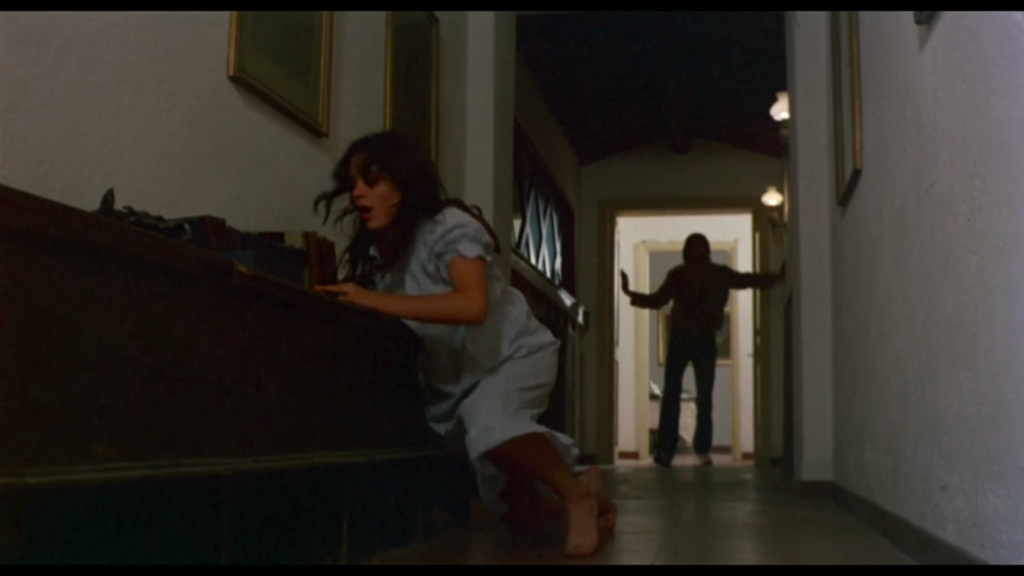
The direction is less boring here than in Anthropophagous; the compositions (D’Amato did the camerawork) are more varied. There’s a sequence when Mikos strangles a lone biker whose wheels have broken down, and the staging conveys a fine cold desolation. The pacing is still dead, though. When the teenage girl rouses herself from traction and blinds Mikos, we get the slowest, most awkward chase in cinema history as the sightless Mikos fumbles down multiple halls after the shaky-legged girl. We watch the idiot little boy try to get back into the house where the killer is, and then spend some time watching him try to get out. Absurd feels pretty padded, to be sure. There’s also a foul-tempered cop (who looks like a cross between Vic Morrow and Bill Maher) on Mikos’ trail. Neither he nor the priest/doctor affects the plot one whit — and people roast Indiana Jones for not making any difference to the end of Raiders of the Lost Ark.
The “kills,” for those who dote on them, have some imaginative oomph. Death by bandsaw, drill to the temple, attempted murder by gas oven — Mikos will just use whatever’s convenient. What Absurd isn’t, though, is absurd. (Its original Italian title was Rosso Sangue, or Blood Red.) I’m not sure why it was called Absurd for English-speaking territories — it sounds like a bad Kurt Vonnegut adaptation. Halloween with an Even Taller Guy might be more like it.
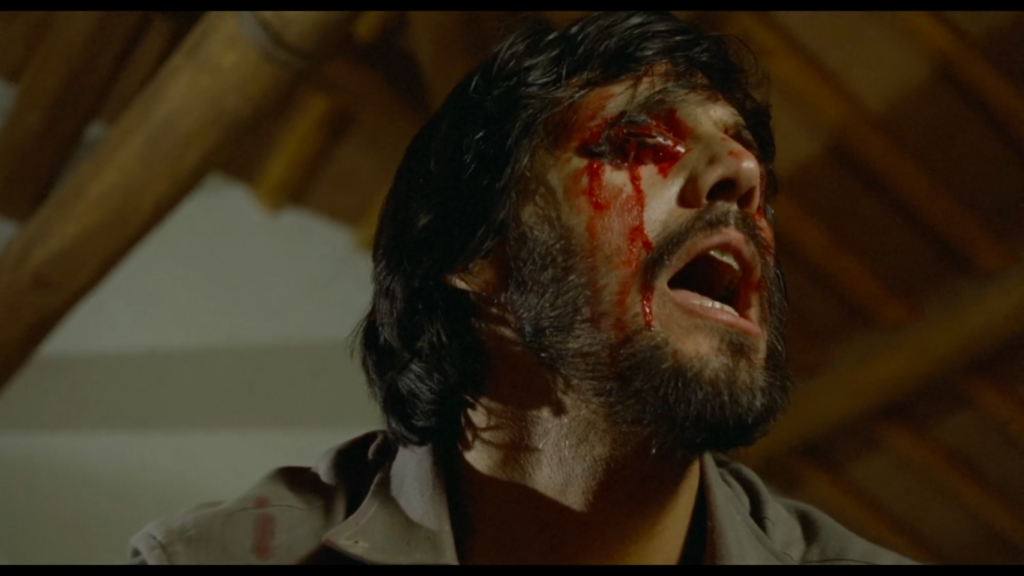
I think I’ve seen bits of Joe D’Amato’s films before, but this was the first time I knowingly sat through two of them. To sit through more, it’d probably have to involve George Eastman (the two worked together frequently). D’Amato is a sometimey, cheesy director in a mode that has its fans; I’m just not one of them. Eastman, though, is soulful and almost operatic in near-wordless performances. I don’t know that he ever speaks in Absurd, and gets one or two lines as the pre-monstrous Klaus. He’s a compelling presence, and I’m sorry his passing just a month or so ago at this writing went without my notice. Based just on these films, he was one of the great screen heavies. Likelihood that Tarantino owns a 35mm print of 1990’s Metamorphosis, the only film Eastman wrote and directed: 98%.
- British Board of Film Classification, similar to the US’s MPAA. ↩︎