

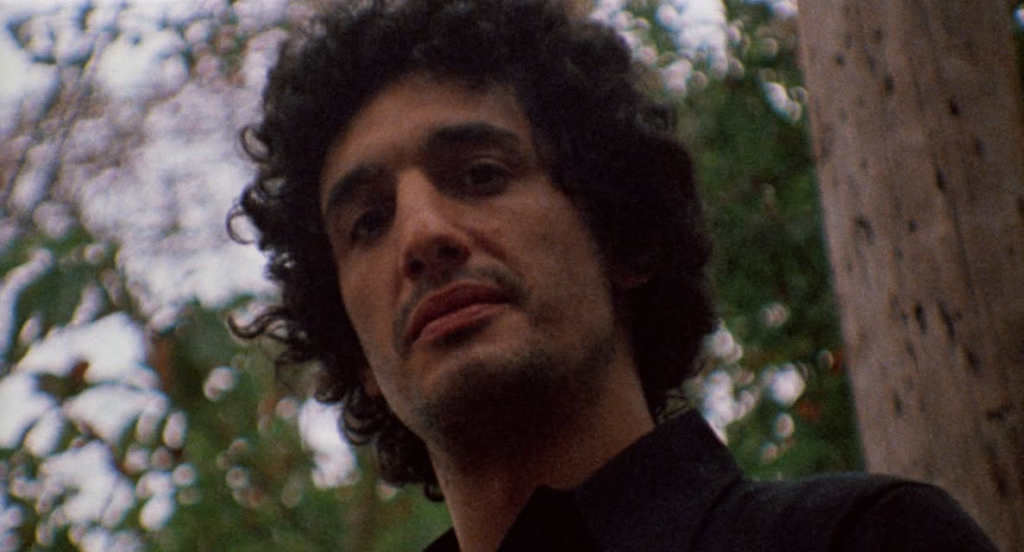
Meet David Hess. A Juilliard-educated musician who wrote several songs that Elvis Presley made famous, Hess (1936-2011) is best known for playing iconic villains in grungy cult horror films. I first saw him as a thug/minion in Wes Craven’s Swamp Thing, a decade or so after Craven had directed Hess in the notorious Last House on the Left (1972). Hess played a baddie again for Ruggero Deodato (Cannibal Holocaust) in House on the Edge of the Park (1980). Both “House” films turned up on the Video Nasties list. Last House and House on the Edge both went through various cuts over the years, until finally they passed without cuts in 2008 and 2021 respectively.
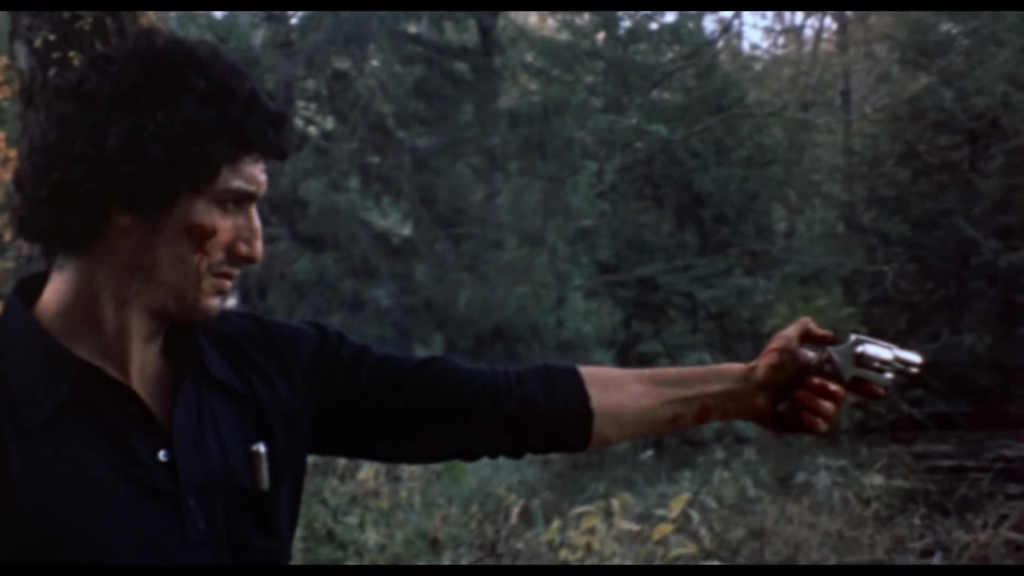
Some folks didn’t quite understand Siskel and Ebert’s crusade against slasher films in the 1980s. Roger Ebert, after all, had given three and a half stars and a rave review to Last House on the Left, which accumulated notoriety over the years among gorehounds who were always on the lookout for a fully uncut version. Wasn’t Ebert one of us? Hadn’t he demonstrated his cred by praising horror like this, Halloween, and The Exorcist? (Maybe most of those ripoff slasher films deserved to be spanked anyway.) I think Ebert responded to the seriousness of intent, and Last House had that; it was a grindhouse riff on Ingmar Bergman, for Pete’s sake (The Virgin Spring).
Two teenage girls out on the town for music and maybe a little weed fall into the clutches of Krug (Hess) and his gang: associates Weasel (Fred Lincoln) and Sadie (Jeramie Rain), and son Junior (Marc Sheffler). They abduct the girls, torture them, and kill them — but that’s not where it ends. Krug and his cadre end up at the house of one of the dead girls’ parents. The gang needs help, and hope like hell the parents don’t find out who they are or what they did.
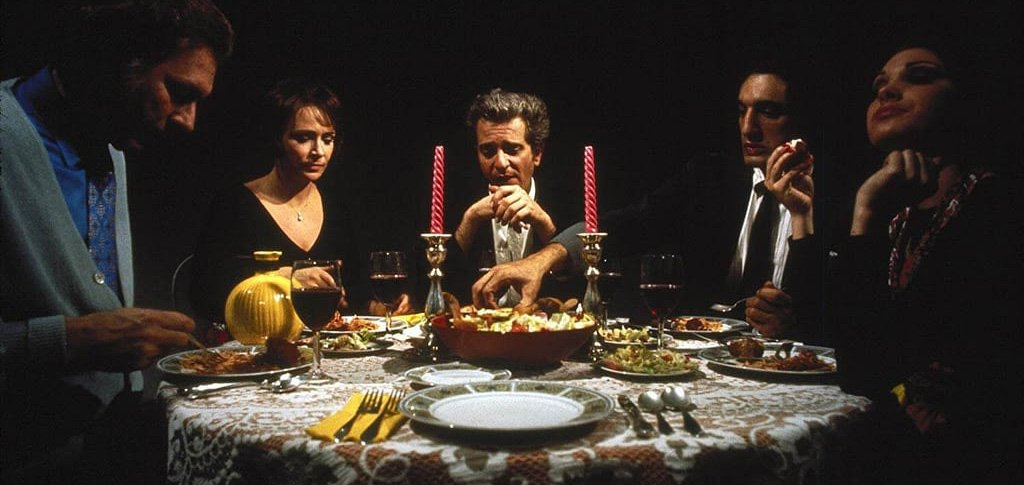
What makes Last House, for me, is that we hear two distinct voices from the same person, David Hess. As Krug, he sounds menacing and almost cartoonishly evil. But on the soundtrack, he’s also heard in the much different context of musical performance, crooning the ballad “Wait for the Rain” and other ditties. Try to think of another horror film — and obviously not a musical — whose villain is played by the same guy who sings on the soundtrack.
People like to make fun of the comic-relief cops on Krug and company’s trail, but Craven may have felt he went over the top in the film’s tragedy, so he might as well turn the comedy up a little loud, too. I don’t mind the cops. They’re the kind of flaws that make me feel warmer towards a film, and this movie can use all the warmth it can get. The scenes of Krug and his thugs trying to be perfect, polite houseguests are a different kind of weird comedy.
One aspect that has aged well is the thick blanket of sickened quietude that falls over the aftermath of each of the two bouts of killing. Someone who doesn’t take death seriously doesn’t direct scenes like that. Craven, often described as soft-spoken and professorial in person (he died in 2015), was already 32 years old and the father of two children by the time he directed Last House. “The duality of man” showed up in Craven’s personality vs. the rampant killers he created (Krug, the mutants in The Hills Have Eyes, Freddy Krueger, Ghostface) as well as in David Hess the icon of fear vs. David Hess the gentle balladeer. That was partly what was missing from the egregiously stupid unofficial “remake”-cum-ripoff Chaos (2005), which was too busy trying to be badass and edgelordy to attempt any subtleties. (When you’re done here, check out Outlaw Vern’s review of Chaos, still the funniest review I’ve ever read.)
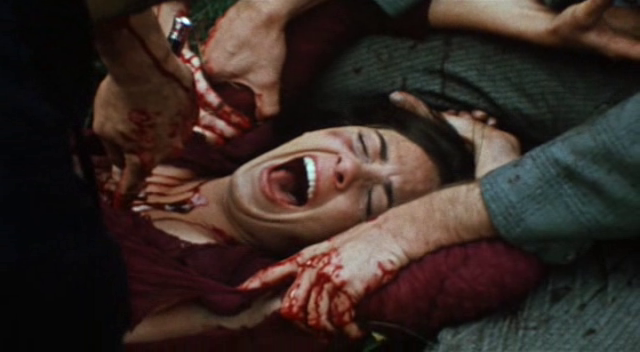
Neither Chaos nor the eventual actual remake (2009) holds a candle to the original Last House. Like a lot of my favorite movies, it’s divided against itself in a way that isn’t easily resolved. Hess can take quite a bit of credit for that as an avatar of rabid evil and also as a musician who at one point sings to his own character (“Krugsie, you know that this fooling around ain’t getting us out of the state”). The 2009 remake might have an overall more skilled cast, but however scary Garret Dillahunt is as Krug, he doesn’t do what Hess did: show us the angel and devil in the same performer.
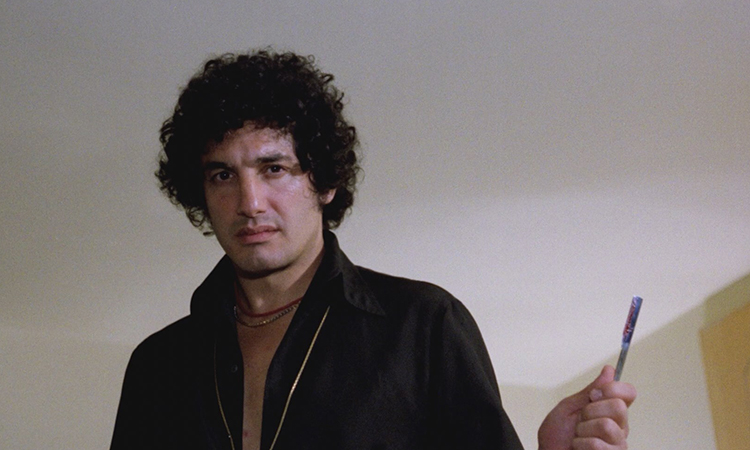
Hess had strong, distinctive features that typecast him as a tough guy from either side of the moral divide. Hess’s Alex in House on the Edge of the Park is decidedly a devil. This was Deodato’s follow-up to Cannibal Holocaust (shot in just three weeks, with his Holocaust scripter, editor, cinematographer, and composer). Some of the casting shows how amusingly small the Italian exploitation world can be. Cannibal Ferox‘s Giovanni Lombardo Radice and Lorraine De Selle both have roles here, and Annie Belle, cast as one of Alex’s victims, went on to star in Joe D’Amato’s Absurd. Radice amounts to the second lead — Ricky, Alex’s partner in brutality, a giggly moron who turns out to have hidden layers of sensitivity. Here more than ever, Radice is a ringer for Orgazmo-era Trey Parker.
House on the Edge is a mega-rapey thriller that’s pretty hard to get through, though the twist ending makes it intriguing and brings out its class-warfare subtext. Alex and Ricky show up by invitation to the opulent digs of some rich young folks. Alex wastes little time flexing and asserting his thuggish will, targeting the three women (eventually four) in particular but saving some bashing for the two guys. Ricky is swept up in the chaos but doesn’t have it in him to rape or terrorize (“She looks scared … I don’t like it like this,” Ricky protests when Alex tries to get him to assault one of the women). These two work together in an underground garage, and that’s probably the extent of their friendship, though Alex seems to need Ricky along as a sort of excuse to degrade the women.
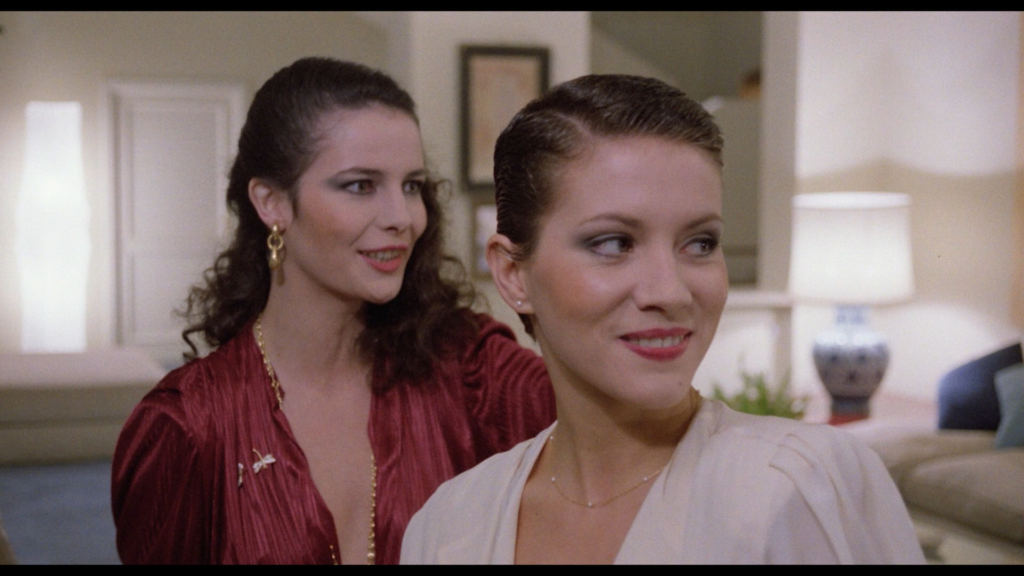
The victims are well-to-do and the invaders are working-class; the tensions that emerge from this take different forms, and Alex, who is not a dummy despite having some moral screws loose, is quick to identify and call out condescension and examples of the richies “taking you for a ride.” (He’s not wrong there, either.) The women are very urban 1981 chic, their guy friends almost foppish; Alex and Ricky are supposedly planning to go “boogying” before taking a detour to richville, though it’s hard to know what disco would let them in.
As an actor, Hess had more presence than resonance. Directors didn’t hire him for his subtlety. What’s weird is the general lack of affect the rich characters display versus the rage and brute triumph and fear Alex and Ricky fairly ooze. The twist, frankly, doesn’t bear much scrutiny and tends to cast the victims as responsible for their own horrors — although their strangely placid demeanor is explained somewhat by the twist. It’s nowhere near as insulting as the twist in Haute Tension, but a viewer may still say “Wait a minute….”
A political reading of House on the Edge of the Park makes sense, given Deodato’s messaging in Cannibal Holocaust. In both, privileged people get in over their heads among the more brutish. At times the narrative reminded me of Harlan Ellison’s Jack the Ripper short story “The Prowler in the City at the Edge of the World,” in which Jack turns out to have been placed in a virtual-reality city where his butchery is entertainment for the citizens. That’s not what happens here, not remotely really, but after you’ve watched the movie, let Ellison’s premise wash over you a bit.
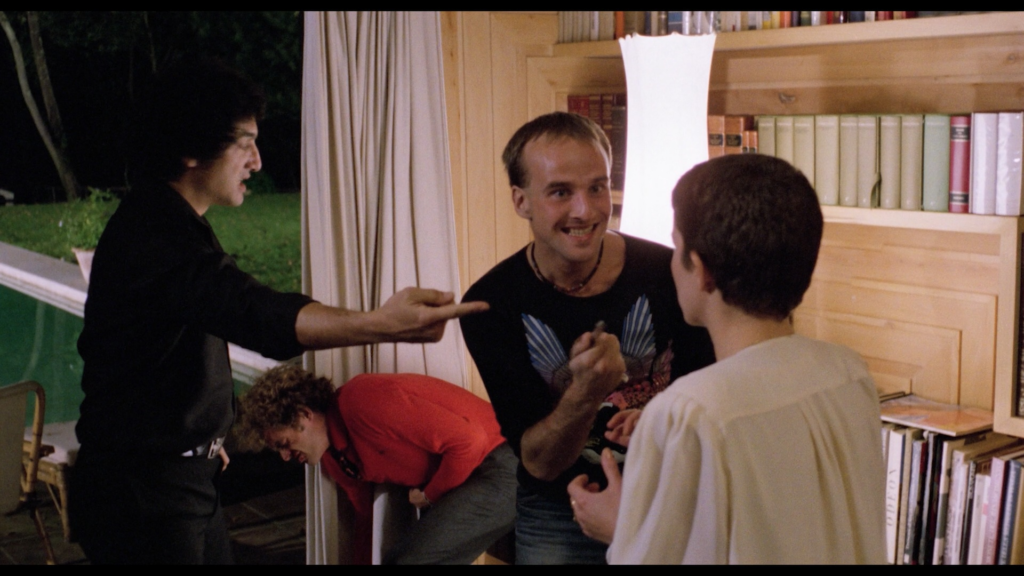
At one point, a fourth woman enters the fray, and we get to hear David Hess’ singing voice again, crooning softly to Alex’s new victim. Just when I was thinking that House on the Edge was missing that aspect of the Hess experience, along comes this scene, made creepier by its abusive context. “Cindy, oh Cindy,” sings the psycho as he dulls his razor on poor Cindy. And that was David Hess, beauty and ugliness in the same voice, the same soul, as in so many of our own. Would he have shown more shading and complexity in better roles? That’s like asking if Bruce Campbell could have played Shakespeare if he’d been born in London. Hess didn’t get much of a chance to be great, but he settled for being memorable as hell — as Satan himself.
Last House on the Left is free on Tubi. House on the Edge of the Park is free on Hoopla.